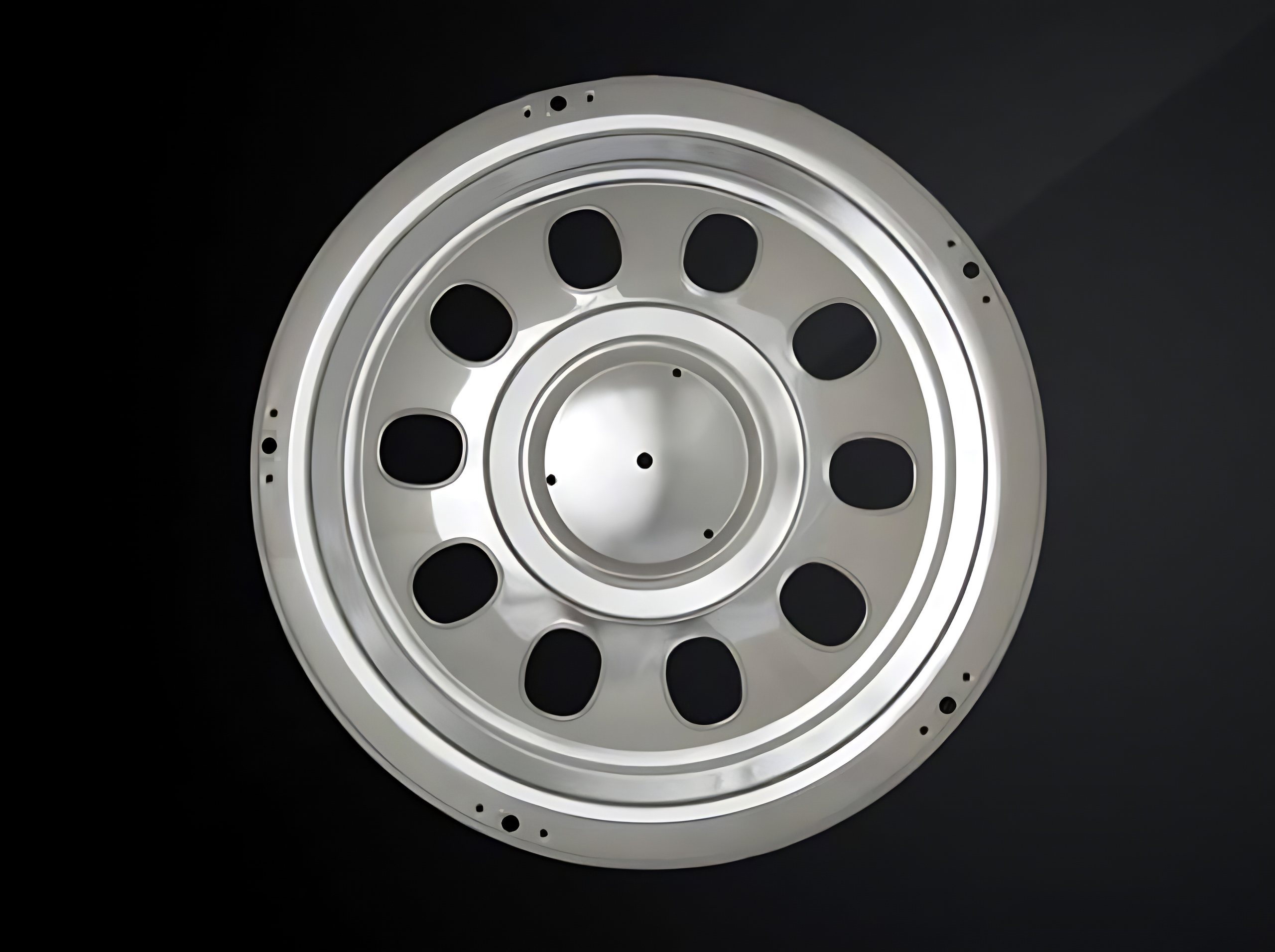
What Is Nickel Plating?
Nickel plating is the electroplating of an even layer of nickel onto the surface of a metal part. The coating protects the part against corrosion and gives the surface a clean matte or bright finish.
Nickel can be applied on its own as the final coat or used as an underlayer for decorative chrome. On chrome-plated parts, the nickel layer provides corrosion protection, while chrome adds scratch resistance and its bluish, bright color.
Which Materials and Parts Can Be Plated?
Steel, iron, brass, copper and zamak parts can be plated. Aluminum and stainless steel require pre-treatment, so for these materials we begin with a sample run.
The parts we plate span many industries: hubcaps, trim strips and emblems in automotive; chair legs, handles and fittings in furniture; samovars, kettles and trays for home and kitchen; chandelier bodies and wall sconces in lighting; panels and wire racks for home appliances; and visible, corrosion-prone components in machinery. Parts up to 1.1 m in length can be plated at our facility.
The Nickel Plating Process
Every batch goes through the same steps:
Receiving and inspection: Incoming parts are recorded by quantity, material and surface condition.
Grinding: Burrs, scratches and oxide layers are removed to prepare the surface for plating.
Polishing: Buffing with felt wheels and compound lays the foundation for the final finish.
Nickel bath: After degreasing and pickling, parts are mounted on racks and plated in the nickel bath.
Quality control and dispatch: Every batch is visually inspected, packed in protective packaging and dispatched.
Because grinding, polishing and plating take place in the same facility, one team manages each part from start to finish.
Matte and Bright Nickel Compared
Matte nickel gives a satin, non-reflective finish that shows fewer fingerprints, while bright nickel creates a mirror-like surface. Corrosion resistance is similar for both; the choice depends on where the part is used and the desired appearance.
Bright nickel is also the underlayer for decorative chrome, so parts that will be chrome-plated receive a bright nickel coat. If you are unsure which finish suits your part, a sample run lets you see the result before series production begins.
Coating Thickness
Nickel is applied in a thickness range of 5–25 µm. The right thickness is agreed at the quotation stage, based on where the part is used and whether nickel is the final coat or an underlayer for chrome.
Lead Times and Delivery
The average lead time for standard batches is 48 hours. For high-volume series work, the lead time is set according to the production schedule. With a capacity of 600 parts per day, series work is carried out to plan.
Parts can be delivered to our workshop or sent by courier or freight. For series work within Bursa, pick-up from your premises can be arranged. The minimum quantity depends on the part type; samples and small batches are also accepted.
Why Serbest Nikelaj?
Serbest Nikelaj is a family-owned company that has been serving manufacturers in Yıldırım, Bursa, since 1987. Grinding, polishing and electroplating are carried out under one roof in our own baths, and we manage every part from intake to dispatch, which gives us full control over lead times and quality.
Because nickel and chrome plating are done in the same workshop, every step from surface preparation to the final coat is part of a single plan.
Requesting a Quote
You can share a photo of your part, its material and the quantity through the quote form, by phone or via WhatsApp, and we will recommend a suitable finish and prepare a quote. Answers about minimum quantities, materials, lead times and delivery are available in the Frequently Asked Questions section on our home page.